Comparative genomics and the evolution of marine invertebrates.
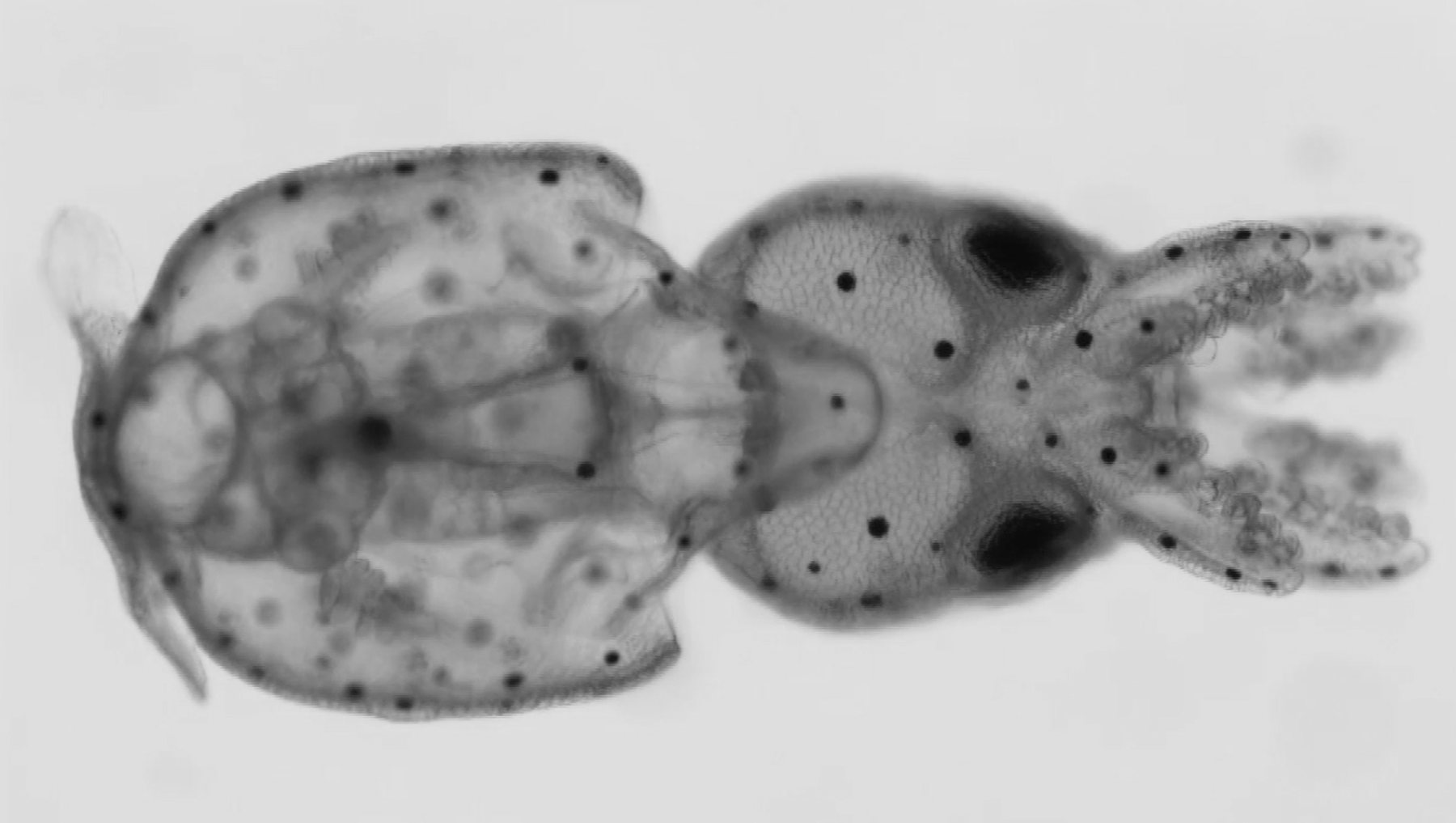
Octopus kidney carrying commensal dicyemids. Live, 20×.
I study how animals are built and how those designs changed over evolutionary time, working across the invertebrate tree rather than within a single model organism.
Genomes tell you what components an animal has. Getting from a parts list to an understanding of function means going back to the animals themselves: culturing them, imaging them, perturbing them. That has meant octopus and squid for much of my career, alongside ctenophores, molluscs, echinoderms, and cnidarians.
I trained in evolution and development at Utrecht, then worked on genome evolution with Dan Rokhsar at Berkeley and Sydney Brenner at OIST, on biodiversity genomics as a Vetlesen Fellow at the Marine Biological Laboratory, and on sonogenetics at the Salk Institute. Since 2023 I have been a research scientist at the Whitney Laboratory for Marine Biosciences.
Much of that time has been spent at marine field stations, particularly Friday Harbor Laboratories, where access to a rich local fauna makes this kind of comparative work possible in a way it is not anywhere else.
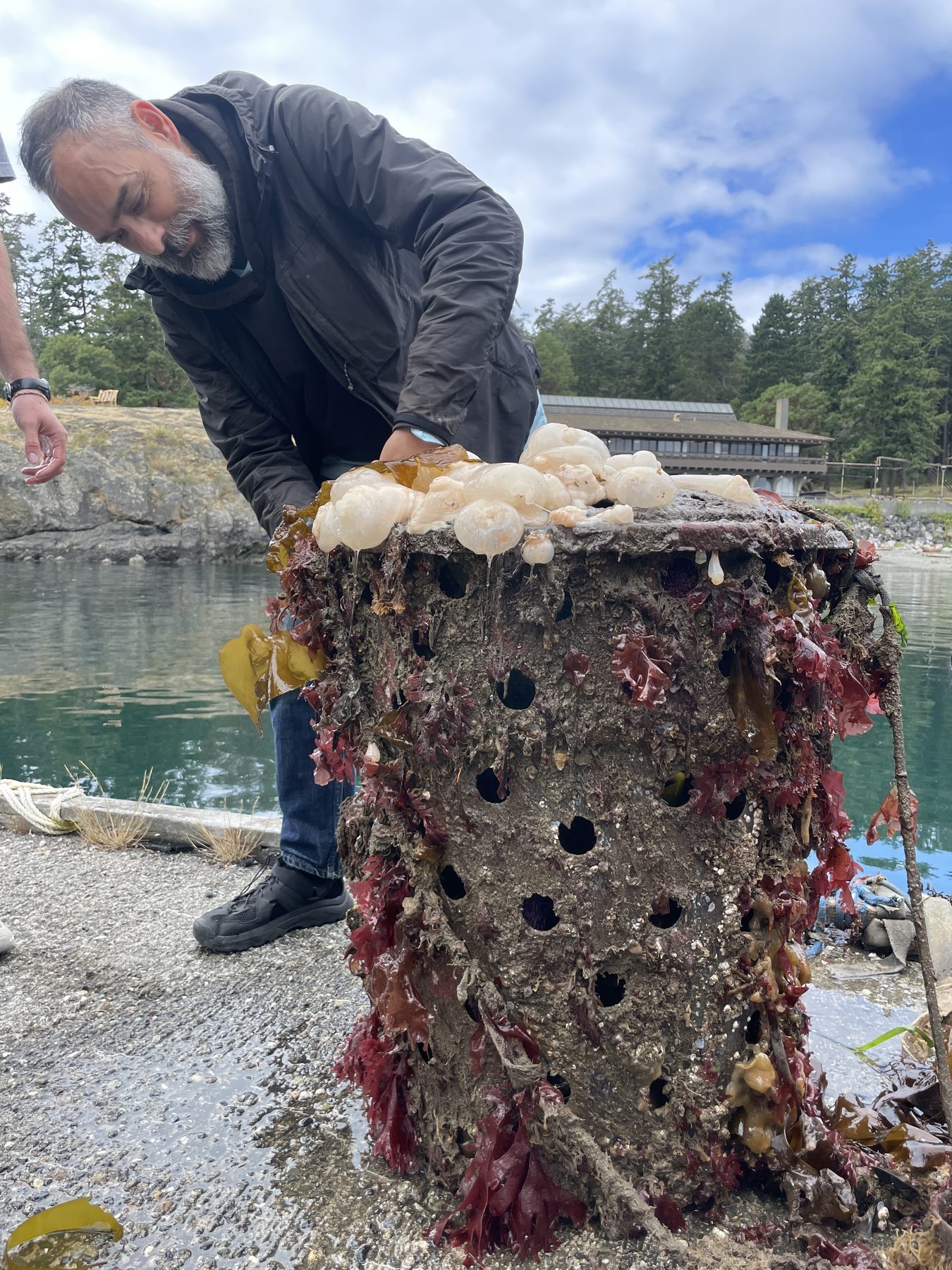
In development with Victoria Foe, Friday Harbor Laboratories.
The pachytene checkpoint and its underlying synaptonemal complex are found in humans and other animals, in plants, and across eukaryotes generally.
At the checkpoint, the synaptonemal complex identifies gamete-producing cells that carry structural rearrangements in the genome and flags those cells for destruction. The checkpoint is not fail-proof, and some low percentage of cells with rearrangements slip through.
Genes residing within a structural inversion no longer mix with the rest of the genome over time, locking them in. Foe hypothesizes that beneficial genes protected within structural inversions that slip through the pachytene checkpoint could lead to sympatric speciation.
Two lines follow that can be tested directly.
Build chromosome-level assemblies for pairs of recently diverged or actively diverging species, identify the inversions that distinguish them, and ask what genes those inversions carry. If the model holds, the captured genes should point at the biology separating the species rather than being an arbitrary sample of the genome.
Use CRISPR and related tools on components of the pachytene checkpoint to change how stringently it culls cells carrying rearrangements. A checkpoint that can be made measurably more or less permissive is a direct test of whether it is doing the filtering the model requires.
Reconstructing which molecular components were present early in animal evolution and which were built, expanded, or lost along particular lineages. This includes the octopus and spiralian genome projects, localized chromosomal gene expansions as a signature of lineage-specific innovation, and expansions in TRP channel diversity across animals.
Serotonergic signaling and social behavior in octopus, social tolerance in Octopus laqueus, and the development of pygmy squid and other small species as tractable laboratory animals.
Reference genomes for taxonomically diverse Salish Sea eukaryotes, long-read RNA-seq for repairing gene models before phylogenomic analysis, and imaging and genetic tools adapted for animals that do not come with a century of established protocols.
Full list on Google Scholar, or download the complete CV (PDF).
A framework for AI-assisted comparative genomics and phylogenomics, built around the idea that the researcher guides and the AI does the work.
GIGANTIC packages phylogenomic workflows into a project template you copy, rename, and then operate through an AI assistant session rooted at that directory. Species and gene tree construction, HMM protein annotation, orthogroup clustering, and origin-conservation-loss mapping all run under the hood.
The part I care most about is the least exciting one. Every session is documented as it happens, so a finished project is a complete record of how the analysis actually developed. It's meant to be archived and kept the same way you'd keep a lab notebook from the bench.
A three-week intensive training workshop at Friday Harbor Laboratories, which I co-organized and taught in summer 2026.
Participants worked hands-on across cnidarians, echinoderms, and cephalopods, from field collection and culturing through microinjection, CRISPR, light-sheet imaging, and AI-assisted phylogenomics. The workshop was the first to test RNA-sensing constructs in marine invertebrates, a targeting approach that needs only a single ubiquitous promoter rather than a purpose-built one for every cell type.